
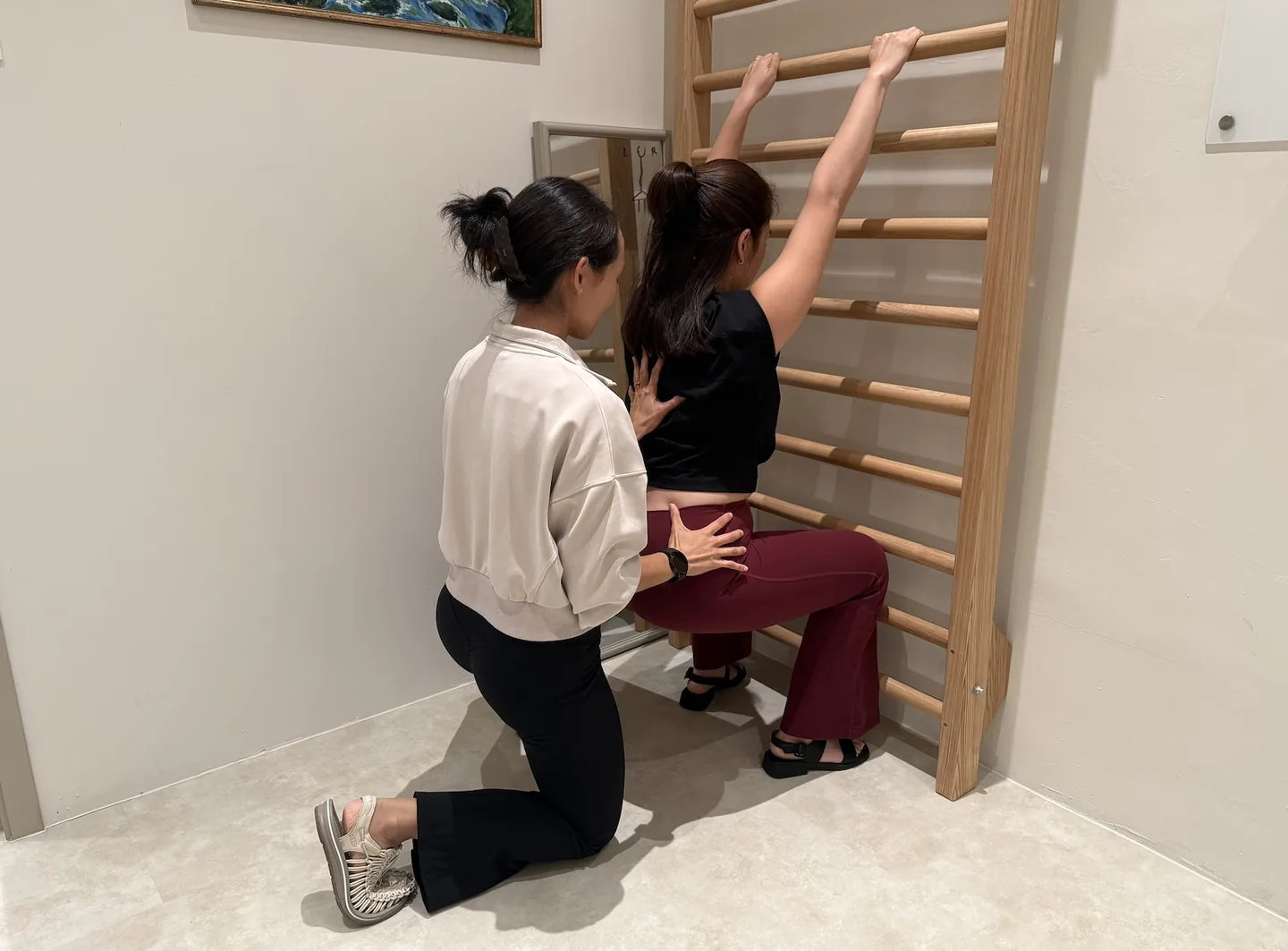
Walking is good for your health, but on its own it is not enough to protect your bones. Exercise guidelines for osteoporosis recommend progressive strength training at least twice a week, impact exercise where it is safe for you, and balance training to help reduce falls. Walking still has a place, as one part of a wider routine.
Exercise can help maintain bone density and reduce your risk of falling. It does not reverse osteoporosis, and it works alongside, not instead of, any medical treatment your doctor recommends.
What happened at “Decoding Osteoporosis”?
On Saturday 10 October 2026 we hosted In Sync with Dr Dinesh - Decoding Osteoporosis at Goji, Lentor Modern. Dr Dinesh Mahendran, Endocrinologist & Medical Director at The Metabolic Clinic, covered the medical side: risk factors, menopause, DEXA scans, calcium and vitamin D, and when medical treatment may be appropriate. Kristy Ng covered the physiotherapy side: strength training, weight-bearing exercise, balance and reducing fall risk. 12 people attended.
As we shared on Instagram afterwards, bones are living tissue, constantly breaking down and rebuilding, and the way we move helps keep them strong. Different types of exercise support bone health in different ways, from building strength to improving balance and reducing fall risk. Our biggest takeaway was to keep moving, and to move in different ways.
The rest of this post is our own explainer on that physiotherapy side.
Is walking enough for osteoporosis?
Generally, no. A 2013 meta-analysis of walking trials in perimenopausal and postmenopausal women found that walking on its own had no significant effect on bone density at the lumbar spine, forearm or whole body. There was some benefit at the hip, but only in programmes lasting more than six months.
The international Too Fit To Fracture recommendations for people with osteoporosis advise against doing aerobic exercise, such as walking, to the exclusion of resistance and balance training. The UK consensus statement Strong, steady and straight makes a similar point: people with osteoporosis should do resistance and impact exercise for bone strength, strength and balance work to reduce falls, and spinal extension exercise for posture.
So keep walking if you enjoy it. It is good for your heart and general fitness. Just add the other types of exercise as well.
What types of exercise help with osteoporosis?
| Type | Examples | What it does | How often (guideline) |
|---|---|---|---|
| Progressive resistance training | Squats, lunges, step-ups, deadlift or hip-hinge patterns, rows, presses, with weights, bands or machines | Loads bone through muscle pull, builds strength, and the load is increased over time | 2-3 days a week (Strong, steady and straight); at least 2 days a week (Too Fit To Fracture) |
| Impact or weight-bearing exercise | Stamping, jogging, low-level jumping or hopping, walk-jog intervals | Short, sharp loads that bone responds to | Most days, around 50 moderate impacts per session, if suitable for you (Strong, steady and straight) |
| Balance training | Standing on one leg, heel-to-toe walking, stepping practice, Tai Chi, dance | Improves steadiness and helps reduce falls | At least twice a week (Strong, steady and straight); daily is encouraged (Too Fit To Fracture) |
| Posture and back extensor work | Back extension exercises, upright posture practice, hip hinge instead of bending through the spine | Supports upright posture and safer movement | Regularly; recommended for everyone with osteoporosis (both guidelines) |
Two pieces of research are useful context here:
- In the LIFTMOR trial, 101 postmenopausal women with low bone mass did 8 months of twice-weekly, 30-minute, supervised high-intensity resistance and impact training. Lumbar spine bone density rose by 2.9% on average, compared with a 1.2% fall in the low-intensity home exercise group. This was a closely supervised programme, not something to copy unsupervised.
- A Cochrane review of exercise for preventing falls in older people living in the community found that exercise reduces the rate of falls by 23%, and balance and functional exercises reduce it by 24% (high-certainty evidence).
An earlier Cochrane review on exercise and bone loss in postmenopausal women described the effect of exercise on bone density as relatively small but possibly important, with combination programmes showing the clearest benefit at the spine.
Is exercise safe if I have osteoporosis?
For most people, yes. Strong, steady and straight found little evidence that physical activity causes significant harm in osteoporosis, and concluded that the benefits generally outweigh the risks. A few precautions are worth knowing:
- Avoid a high degree of spinal flexion, especially under load. Repeated sit-ups, toe touches and deep forward folds are the usual examples. Learn to hinge at the hips instead.
- If you have had a vertebral fracture or several low-trauma fractures, the consensus suggests keeping impact to around the level of brisk walking, and getting individual advice from a physiotherapist.
- If you are at risk of falls, start with targeted strength and balance training before adding brisk walking or more demanding exercise.
- Start supervised. Technique matters, and so does choosing a load that is challenging but right for you. Too Fit To Fracture recommends a physiotherapist’s input for people with vertebral fractures.
Singapore’s ACE clinical guideline on osteoporosis (2025) also encourages regular weight-bearing, muscle-strengthening and balance exercise.
What about osteopenia?
Osteopenia means your bone density is lower than average but not low enough to be called osteoporosis. The same types of exercise apply: progressive resistance training, impact where suitable, and balance work. LIFTMOR included women with both osteopenia and osteoporosis. Our menopause page covers how bone changes around menopause.
Should I get a bone density scan?
Whether you need a bone density (DEXA) scan, and whether you need medication, are questions for your GP or an endocrinologist. In Singapore, the ACE guideline asks doctors to assess the need for bone density testing in people with risk factors, particularly all postmenopausal women and men aged 65 and over. You do not need a scan before starting exercise, but your results can help a physiotherapist plan your programme.
Frequently asked questions
Can exercise reverse osteoporosis?
No. Exercise can help maintain bone density, slow bone loss and reduce your risk of falling. Treatment decisions, including medication, sit with your doctor.
Is swimming or cycling good for bones?
Both are good for fitness and heart health, but neither involves impact, so they do little to load your bones. If you enjoy them, keep going, and add resistance and impact exercise alongside.
Can I lift weights with osteoporosis?
For most people, yes. Progressive resistance training is one of the main recommendations in osteoporosis exercise guidelines. Start with lighter loads and good technique, ideally supervised, and avoid loaded forward bending of the spine.
Is Pilates or yoga safe with osteoporosis?
They can be, and both can help with strength and balance. Strong, steady and straight lists Pilates and yoga among the activities that support balance and muscle strength. Some positions involve deep spinal flexion, which should be avoided or modified, so tell your instructor about your diagnosis.
I am worried about falling. Where do I start?
Start with strength and balance training. Exercise reduces the rate of falls in older adults, and balance work is a big part of that. Our fall prevention page explains what a falls assessment covers.