
Prenatal classes in Singapore fall into five main types: hospital antenatal (childbirth education) courses, prenatal yoga, prenatal Pilates, birth-preparation courses such as hypnobirthing, and one-to-one prenatal physiotherapy. Most people combine one course that teaches labour, feeding and newborn care with one kind of regular movement class. Choose by what you need to learn, how far along you are, and whether your doctor has cleared you to exercise.
Every provider below was checked on its own website in October 2026. Listings are alphabetical and are not a ranking or an endorsement. Schedules and formats change, so confirm details with the provider before you book.
What are the main types of prenatal class?
| Class type | What it is | Who runs it | When people typically start |
|---|---|---|---|
| Hospital antenatal course | Labour and delivery, pain relief, breastfeeding and newborn care, often for couples | Hospital parentcraft or patient education teams | Mid-pregnancy; several hospitals suggest a class date after 20 weeks |
| Prenatal yoga | Breathing, mobility and relaxation adapted to pregnancy | Yoga studios and family centres | Many begin in the second trimester, with their doctor’s clearance |
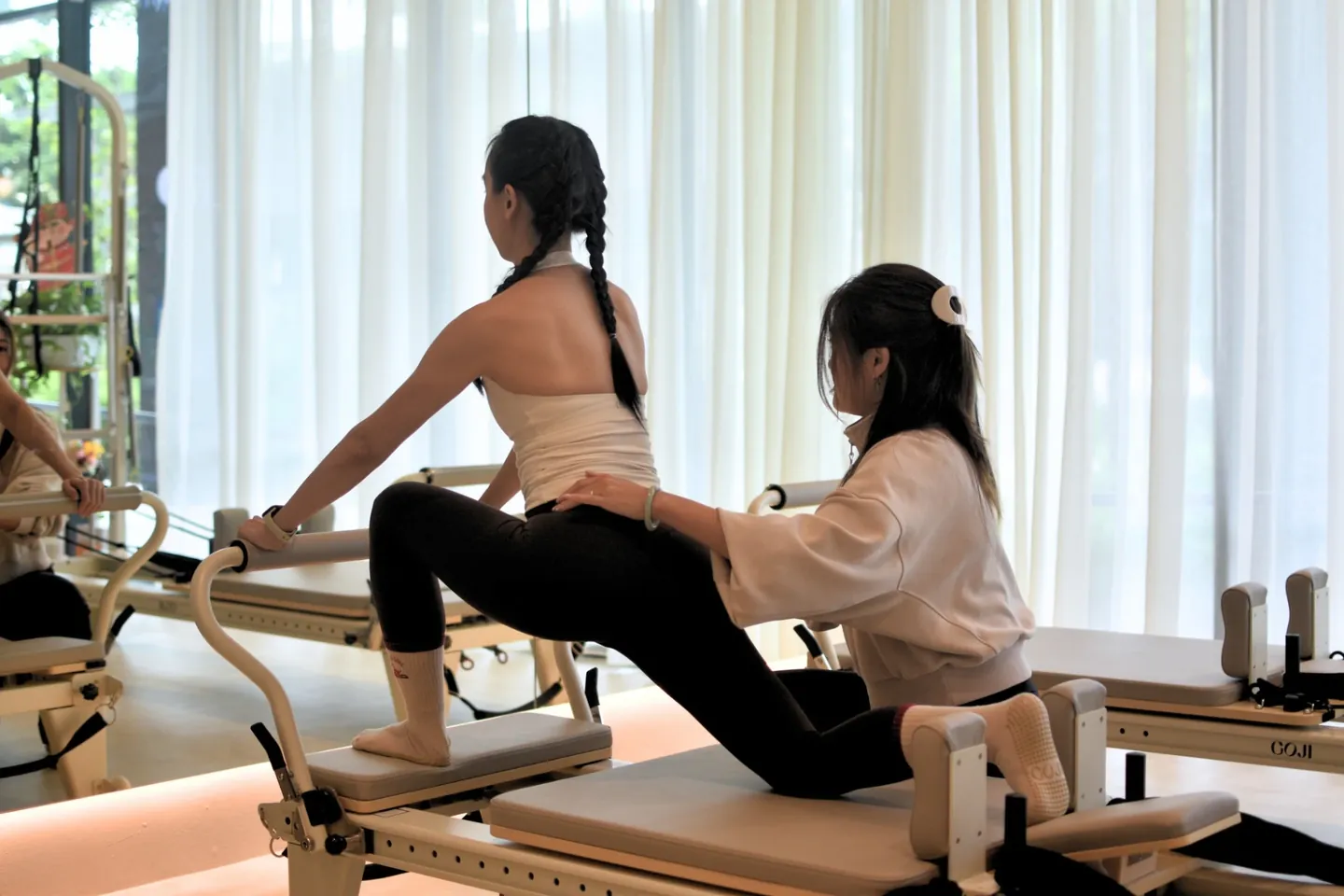
| Prenatal Pilates | Mat or reformer strength and control work adapted to pregnancy | Pilates studios and family centres | Varies by studio; some accept clients at any stage with clearance |
| Birth-preparation course (including hypnobirthing) | Coping techniques for labour: breathing, relaxation, positions, birth options | Midwives, childbirth educators, hypnobirthing instructors | Often the third trimester, so techniques are fresh for labour |
| Prenatal physiotherapy | One-to-one assessment and a plan for pain, pelvic floor symptoms, exercise and birth preparation | Registered physiotherapists | At any stage of pregnancy |
Where can I take a hospital antenatal class?
Eligibility varies, so check before you book. NUH’s programme, for example, is open to patients delivering elsewhere.
- KK Women’s and Children’s Hospital: the KKH Antenatal Programme covers labour and delivery, breastfeeding, newborn care and nurturing your child.
- Mount Alvernia Hospital: the Alvernia Parentcraft Centre runs a one-day childbirth education course on labour, breastfeeding and baby care; its FAQ says you may start after 20 weeks.
- National University Hospital: the Community Antenatal Programme is open to NUH and non-NUH patients, with in-person classes and online videos, and recommends starting in the second trimester.
- Thomson Medical: the ParentCraft Centre’s childbirth education course has a theory class, a practical class and an e-learning portal, with a class date after your 20th week.
Where can I find prenatal yoga?
- Inspire Mum & Baby: small-group prenatal yoga adapted by trimester, at studios in Tanjong Katong Road and Serangoon Road.
- Mother & Child: small-group prenatal yoga at Tanglin Mall, taught by instructors who specialise in prenatal and postnatal bodies.
- Sweatbox Yoga: a six-week prenatal yoga course with one class a week; book 24 hours ahead.
Where can I find prenatal Pilates?
- Breathe Pilates: group and private prenatal reformer Pilates across five studios, with doctor’s clearance required.
- Inspire Mum & Baby: small-group prenatal Pilates alongside its yoga and aqua pregnancy classes.
- Mother & Child: a weekly prenatal Pilates class at Tanglin Mall.
- The Pilates Works: private or customised group prenatal Pilates with certified prenatal Pilates teachers; its locations include Ang Mo Kio.
Where can I take a birth-preparation or hypnobirthing course?
- Beloved Bumps: midwife-led antenatal courses for couples, plus an Active Birth class; it recommends starting between 28 and 32 weeks.
- Mother & Child: a Holistic Childbirth Preparation course, hypnobirthing, a birthing toolkit class and doula support, with a suggested window of 24 to 36 weeks.
- Thomson Medical: a hypnobirthing course combining breathing, guided relaxation and visualisation.
Where does prenatal physiotherapy fit in?
Classes teach a group. A physiotherapist assesses you individually, which can help if you have pelvic girdle pain, back pain, leaking or other pelvic floor symptoms, or you are unsure which exercise suits you. Prenatal physiotherapy can also include pelvic floor preparation and practice of labour positions and breathing.
Goji Physiotherapy at Lentor Modern offers one-to-one prenatal physiotherapy with AHPC-registered physiotherapists. You can read more about prenatal care and pelvic girdle pain.
Is it safe to exercise in a prenatal class?
For most people, yes. The American College of Obstetricians and Gynecologists says that in the absence of obstetric or medical complications or contraindications, physical activity in pregnancy is safe and desirable (ACOG Committee Opinion 804, 2020).
The Asia-Pacific consensus on physical activity and exercise in pregnancy (Lee et al., 2021, developed at a workshop in Singapore) adds practical guidance:
- Aim for at least 150 minutes of moderate-intensity activity a week, if you have no contraindications.
- If you have a medical condition, speak to your healthcare provider early, before you start.
- Skip hot yoga and hot Pilates, contact sports, activities with a high risk of falls, and scuba diving.
- After the first trimester, avoid exercising lying flat on your back.
- Stop and seek medical attention straight away for warning signs such as vaginal bleeding, regular painful contractions, leaking fluid or chest pain.
What should I ask before I sign up?
- What prenatal training does the instructor have? Ask for the specific prenatal or perinatal qualification, not only a general yoga or Pilates certificate.
- How large is the class, and will the instructor adapt exercises for my trimester and any symptoms?
- Do you need my doctor’s clearance, and what health questions do you ask at sign-up?
- What do you leave out in pregnancy? A good answer covers heat, lying flat on your back later in pregnancy, and positions or loads that cause pain or pressure.
- Can my partner attend, and are classes in person, online or both?
- What is the cancellation and rescheduling policy if my due date or health changes?
Frequently asked questions
When should I book an antenatal class?
Book early, because classes can fill up, but choose a class date that suits the provider’s window. Several Singapore hospitals suggest a date after 20 weeks, and some birth-preparation courses suggest the late second or early third trimester.
Can I do prenatal yoga or Pilates in my first trimester?
Some studios accept clients at any stage with doctor’s clearance, while others prefer you to start in the second trimester. Check with your doctor and the studio first.
Do I need to attend antenatal classes at the hospital where I will give birth?
Not necessarily. Some hospital programmes, such as NUH’s, are open to non-patients. Your own hospital’s course can still help you learn its specific procedures.
Can my partner come to antenatal classes?
Many antenatal and birth-preparation courses are designed for couples, and some charge per couple. Check when you book.