
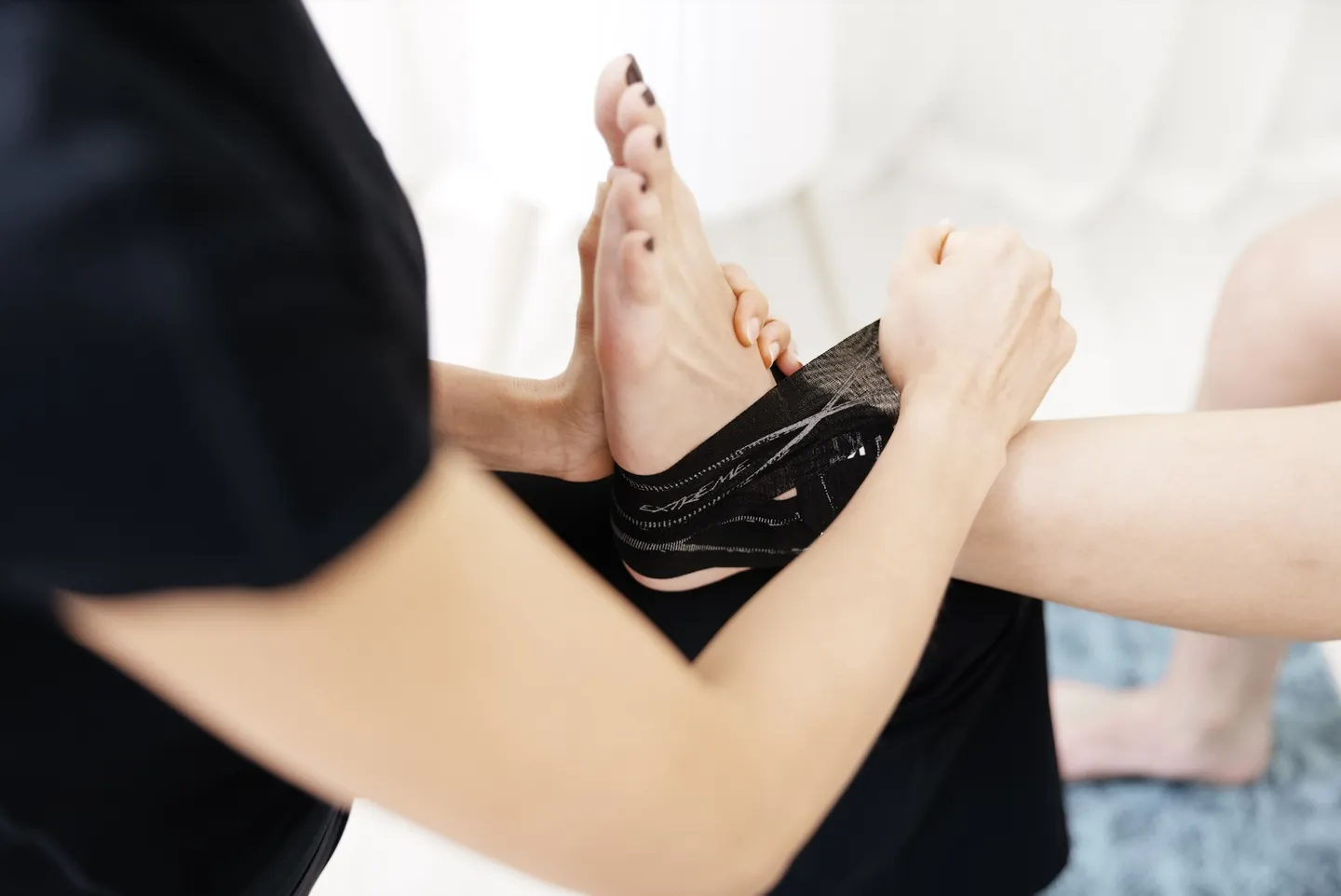
A first appointment at Goji runs 55 minutes. Most of it is spent working out what is going on, not treating. You leave with an explanation of what we found, a plan, and something to do before the next session. You do not need a doctor’s referral to book.
What should I bring, and do I need a referral?
| Do you need it? | |
|---|---|
| Doctor’s referral | No. You can book directly. If your insurer reimburses physiotherapy, check whether they ask for one. |
| Scans or X-rays | No. Bring recent imaging or a specialist letter if you have it, but the assessment does not depend on it. |
| Clothing | Something you can move in that lets us see the area: shorts for knees, hips and backs; a vest top for necks and shoulders. |
| A list of medications and past injuries | Helpful, not essential. |
If you are coming for a pelvic health appointment, come as you are. Nothing internal happens without a separate conversation and your agreement.
The conversation, which is most of it
The first stretch is questions, and they go wider than the sore part. What happened and when. What makes it worse and what settles it. How it behaves across a day. What you were doing before this started and what you cannot do now. Sleep, prior injuries, medical history, and for pelvic health appointments, bladder and bowel history.
This is not small talk. Much of the diagnostic information in musculoskeletal physiotherapy comes from the history rather than the hands-on part. It also establishes what matters to you, which is what the plan gets built around. “Able to carry my toddler up the stairs” and “back to netball” are different goals and lead to different programmes.
What does the physical assessment involve?
Then we look at how you move. Depending on the problem, that includes:
- Watching functional movements: squatting, bending, reaching, walking, hopping
- Testing joint range and how it feels at end range
- Strength testing the relevant muscle groups
- Specific tests to include or exclude particular structures
- Hands-on assessment of the joint and soft tissue
For pelvic health appointments this may include an internal vaginal assessment, which gives the clearest information about pelvic floor function. It is offered and explained, never assumed, and you can decline it and still have a thorough assessment.
What will I be told at the end?
Before you leave, you should be able to answer three things: what we think is going on, what is going to help, and roughly how long it is likely to take to know whether it is working. If any of those are unclear, ask, because that is the part that makes the rest of it work.
Sometimes the honest answer to the first one is a shortlist rather than a single diagnosis, and the plan is built to narrow it down. That is a normal outcome of a first visit, not a failure of one.
What do I leave with?
Usually some hands-on treatment in the same session if it is appropriate, and always a home programme. The programme is deliberately short. Three or four exercises that get done beat a dozen that do not.
We will also tell you what to expect between now and next time, including what a normal amount of post-session soreness looks like and what would be a reason to contact us sooner.
Frequently asked questions
Do I need a doctor’s referral?
No. You can book a physiotherapist directly in Singapore. If we think you need medical review or imaging, we will say so and help you arrange it.
How many sessions will I need?
It depends on the problem, and a firm number before an assessment is a guess. What we can do at the first visit is tell you when we should expect to see a change, and review honestly at that point.
Will it hurt?
Assessment sometimes reproduces your symptoms, so you may feel the familiar pain during certain tests. That is information, not damage. Treatment should be tolerable, and you can stop at any point.
Can I bring my baby or child with me?
Yes, babies are welcome. The clinic is stroller and wheelchair friendly.