Paediatric Physiotherapy (0-18Y)
Schroth Therapy - Children
Scoliosis-specific physiotherapy (Schroth Method) tailored to your child's curve, growth and goals, to support posture, strength and confidence.
- Duration
- 55 min
- Options
- In-clinic $260 · Home visit $330
- Seen by
- Cheryl Long
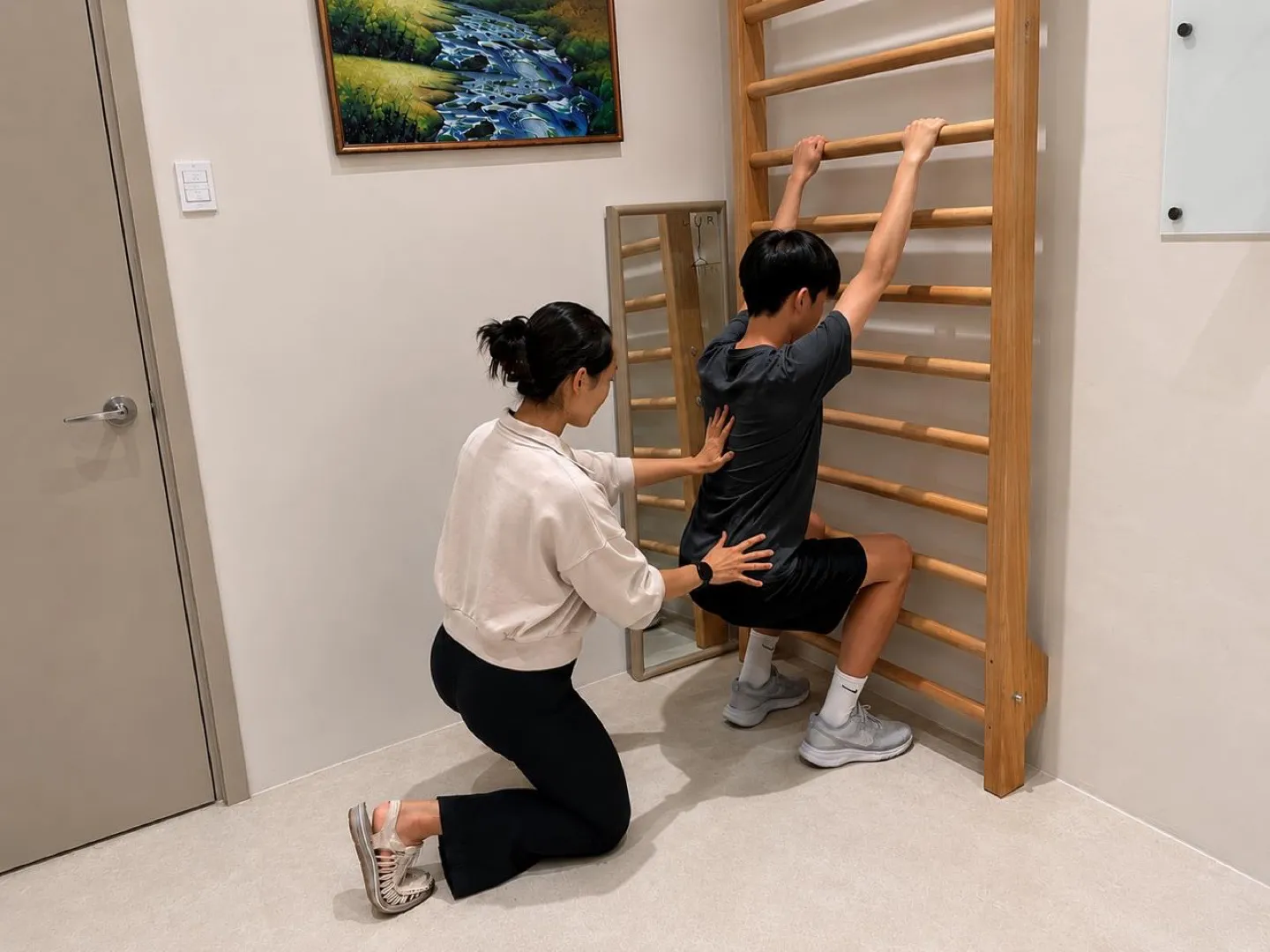
A personalised, scoliosis-specific physiotherapy programme based on the Schroth Method. Exercises are tailored to your child’s spinal curve, stage of growth, physical needs and goals.
The Schroth Method uses three-dimensional postural correction, breathing and movement exercises to support posture, strength, body awareness and everyday function. It can be used alongside medical monitoring or bracing where required.
Note: The assessment and treatment described below are indicative. Your child’s programme will be tailored to their individual curve, needs and goals, and may be modified by your physiotherapist based on their clinical judgement.
Who can benefit from the Schroth Method?
Schroth Method may be suitable if your child:
- Has been diagnosed with scoliosis
- Is being monitored during a period of growth
- Has uneven shoulders, shoulder blades, waist or hips
- Has a visible spinal curve, rib prominence or trunk shift
- Experiences back discomfort, stiffness or muscular fatigue
- Is wearing a brace and needs guidance with movement and exercise
- Wants to improve confidence in daily activities, exercise or sport
- Has been referred for scoliosis-specific physiotherapy
Common scoliosis signs and symptoms we assess
We assess and manage a range of scoliosis-related concerns, including:
- A diagnosed spinal curve, monitored during growth
- Uneven shoulders, shoulder blades, waist or hips
- Rib prominence or trunk shift
- Reduced spinal mobility or flexibility
- Back discomfort, stiffness or muscular fatigue
- Difficulty with posture, balance or movement control
- Movement and comfort while wearing a brace
What happens during the appointment?
Your physiotherapist will first discuss your child’s diagnosis, growth, symptoms, daily activities and goals, and review any available X-rays, specialist reports and treatment recommendations.
The physical assessment may include:
- Observation of standing and sitting posture
- Spinal movement and forward-bending assessment
- Assessment of the shoulders, ribcage, pelvis and lower limbs
- Strength, flexibility, balance and movement testing
- Identification of your child’s individual curve pattern
Your child will then begin learning Schroth-based techniques, which may include three-dimensional postural correction, spinal elongation, rotational breathing, and muscle activation to maintain a corrected position during sitting, standing and movement. Exercises are taught in age-appropriate language, with a parent or caregiver involved where helpful.
What you will leave with
You and your child will receive:
- A clear explanation of the assessment findings
- An understanding of your child’s curve pattern
- Personalised Schroth-based exercises
- Breathing and postural correction strategies
- A home exercise programme with clear instructions
- Guidance for school, daily activities, exercise and sport
- Advice on integrating exercises with brace treatment, where relevant
- Recommendations for follow-up care
Your next steps
Depending on your child’s assessment and goals, we may recommend:
- Individual Schroth Method sessions
- Regular reviews and progression of the home programme
- Physiotherapy for pain or movement concerns
- Strength and Conditioning
- Support alongside brace treatment
- Referral back to an orthopaedic specialist, where appropriate
Schroth Method supports the non-surgical management of scoliosis but does not replace regular medical monitoring, bracing or surgery when these have been recommended.
Book your Schroth Therapy - Children
We'll take a few details and match you with the right physiotherapist. Prefer to talk it through first? Message us on WhatsApp.